
 NextPrep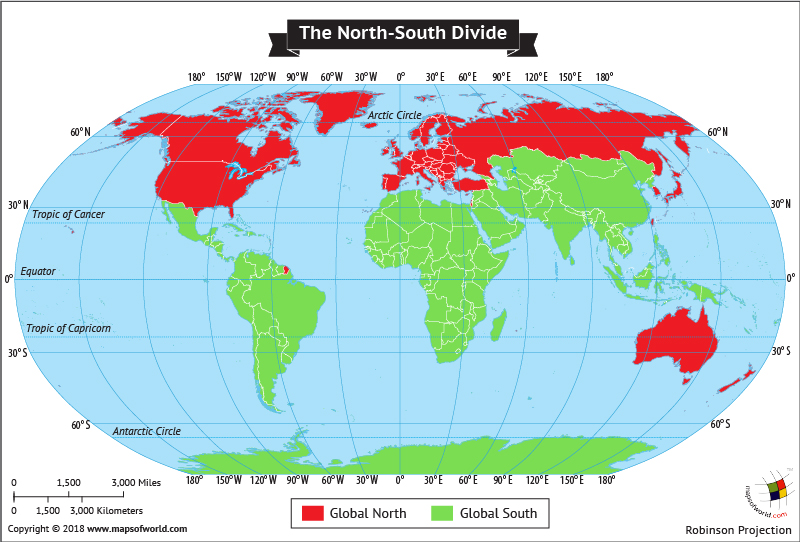
Climate Justice · Opinion
The Climate Change Crisis and the Injustice Facing the Global South
A third of Pakistan drowned in 2022. Africa loses up to 5% of its GDP every year to a crisis it barely caused. The Global South did not start this fire — and yet it is the one burning.
The Crime Without a Culprit — Or Rather, Without Accountability
Imagine being sentenced to bear the consequences of a crime you did not commit. Imagine watching your home flood, your harvest fail, your children fall sick from waterborne disease — all while the actual perpetrators sit comfortably behind glass in climate-controlled conference rooms, debating targets they consistently fail to meet. This is not a thought experiment. This is the lived reality of billions of people across the Global South.
The climate crisis is, at its core, a crisis of injustice. Not just environmental injustice — though it is certainly that — but a profound moral failure of accountability. The nations that industrialized earliest, burned the most coal, pumped the most oil, and grew the wealthiest on the back of fossil fuels are the same nations that today write the rules, control the funds, and decide the pace of action. And the nations that played the least role in creating this catastrophe — across sub-Saharan Africa, South Asia, Southeast Asia, Latin America, and the small island states of the Pacific — are drowning, literally and economically, in the consequences.
This is not a soft, hand-wringing observation. It is a measurable, documented, scientifically verifiable injustice. And the world's most powerful governments are running out of excuses to avoid confronting it head-on.
"What is happening right now at 1.2 degrees centigrade of warming is not because of the poor people in Pakistan. They are not responsible for it, and this brings out the issue of climate justice in a very clear form."
— Climate Scientist, quoted in CNN (2022) [20]
The Numbers Don't Lie: Who Actually Built This Crisis
Let us begin with the data, because facts are the sharpest weapon against comfortable amnesia. The Global North — comprising Europe, North America, and a handful of wealthy nations — is responsible for approximately 92% of all excess historical greenhouse gas (GHG) emissions since the Industrial Revolution.[3] The World Inequality Database estimates that these same affluent nations produced a carbon footprint roughly 100 times greater than that of the world's poorest populations.[1]
Meanwhile, countries in the Global South collectively account for less than 20% of historical CO₂ emissions, and most of that fraction is concentrated in a handful of large emerging economies — not in the low-income, highly vulnerable nations that bear the sharpest brunt of warming.[7] In fact, the top 10 highest-polluting countries within the Global South account for 78% of the group's entire emissions, while 120 other lower-income nations collectively produce just 22%.[8]
In the year 2022, total global GHG emissions reached a record high of 36.6 gigatons. The top three emitters — China, the United States, and the European Union — together accounted for about 53% of that total. Latin America as a whole contributed roughly 7%.[10] Africa, the continent of 1.4 billion people, contributes less than 5% of emissions responsible for the global climate crisis — and yet it is experiencing its hottest decade on record and watching its agricultural economies unravel in real time.[26, 27]
Key Data Points
- Global North: ~92% of excess historical GHG emissions [3]
- Global South: <20% of historical CO₂ emissions [7]
- Africa: <5% of GHG emissions, yet warming faster than global average [26]
- Pakistan: <1% of global emissions, ranked among the 10 most climate-vulnerable nations [16]
- Bottom 50% of the world (3.8 billion people): responsible for only 12% of all emissions [1]
Real People, Real Ruin: The Human Face of Climate Injustice
Statistics describe scale. But it is the individual stories — the farmer who has lost three consecutive harvests, the mother displaced into a relief camp with a newborn, the fishing village that no longer exists — that expose the true moral dimension of what is happening.
Pakistan: A Nation Underwater
In the summer of 2022, Pakistan experienced the most catastrophic flooding in its recorded history. One third of the country was submerged. Over 33 million people were directly impacted. At least 1,700 people lost their lives — among them 386 children. Eight million were displaced from their homes.[11] The economic toll was staggering: approximately $30 billion in total damages and GDP losses.[14] A cholera outbreak followed. One in three children aged 6 to 23 months in flood-affected districts developed moderate acute malnutrition; 14% suffered from severe acute malnutrition.[18]
And Pakistan's contribution to the global carbon trajectory? Less than 1%.[16] The World Weather Attribution group of scientists confirmed that human-caused climate change made the extreme rainfall that triggered the floods significantly more probable.[19] In a single line of devastating arithmetic: Pakistan contributes less than one percent of the problem, yet faces a 15-fold higher risk of death from climate-related disasters compared to high-income nations.[11]
In June 2025, Pakistan's climate minister was still lamenting what he called a "crisis of justice" — pointing out that the US and China alone account for roughly 45% of global emissions, while Pakistan receives only a negligible fraction of available green financing despite suffering relentless, year-after-year flood catastrophes.[14]
Africa: Continent of Drought, Flood, and Broken Promises
Africa is warming faster than the rest of the world on average. In 2023, the continent registered its hottest or second-hottest year on record — capping what is already the warmest decade in African history.[27] In the Horn of Africa, five consecutive seasons of catastrophic drought displaced 2.7 million people, followed by deadly floods that displaced a further 1.4 million.[26] In West Africa in 2024, flooding devastated communities across Niger, Benin, Ghana, and Nigeria. Parts of Morocco, Algeria, Tunisia, Ethiopia, and Zambia — Zambia in its worst drought in 40 years — were simultaneously gripped by extreme dry spells.[22]
Over 110 million people across Africa were impacted by the climate crisis in 2022 alone.[21] Food inflation hit its highest level in three decades. Roughly 282 million people — 20% of Africa's population — are currently undernourished.[21] These are not the victims of their own emissions. These are the victims of someone else's industrialization, someone else's luxury, someone else's refusal to act quickly enough.
Bangladesh and the Small Island States: Vanishing From the Map
Bangladesh contributes less than 0.4% to global CO₂ emissions, yet it regularly features among the most climate-battered nations on Earth.[7] In 2020, Cyclone Amphan swept through Bangladesh and India, displacing millions and inflicting billions in damages. In 2023 and 2024, catastrophic floods struck East and West Africa in sequence. Small Island Developing States (SIDS) — nations that have contributed almost nothing to global warming — face the existential threat of entire territories being submerged by rising seas.[4] For these nations, climate change is not a policy debate. It is a question of continued existence.
The Economic Hemorrhage: Paying to Survive a Crisis You Did Not Cause
The economic argument for climate justice is not sentimental — it is coldly arithmetic. Climate change is actively reversing decades of development progress in the Global South and making poverty harder to escape with every passing year of inaction.
African countries are currently losing 2 to 5% of their GDP annually due to climate-related damage. Many are diverting as much as 9% of their government budgets simply to respond to climate extremes.[22] The World Meteorological Organization estimates that adaptation costs in sub-Saharan Africa alone will reach $30 to $50 billion per year over the next decade.[22] Looking further ahead, Africa's average per capita GDP is projected to drop by 7.1% in the long term due to climate change, with country-level losses estimated as high as 26.6%.[27, 30] Agricultural production in Africa could decline by 18% by mid-century; the value of farmland may drop between 36% and 61%.[30]
Globally, the United Nations Environment Programme estimates that adaptation costs in developing countries could reach $140 to $300 billion annually by 2030 — far beyond what current international climate finance provides.[7] The World Bank has warned that the climate crisis could push up to 135 million people into poverty by 2030 if the trajectory does not change.[1]
This is not merely economic damage in the abstract. It means children pulled out of school because the family farm failed. It means women walking further for water as rivers dry up. It means young men migrating from rural areas that can no longer support life, feeding into urban informal settlements that are themselves flood-prone. Scientists predict that climate-induced stressors will displace and profoundly impact up to 143 million people in the Global South by 2050.[10]
Climate Colonialism: Old Exploitation, New Language
There is a term — still contested in polite diplomatic circles, but increasingly recognized in academic and activist discourse — that captures the structural dimension of this injustice: climate colonialism. It refers to the way in which wealthy nations, having enriched themselves through centuries of fossil-fuel-driven industrialization, now use their economic and political leverage to impose climate solutions on the Global South that serve Northern interests, while exporting the costs and consequences southward.[3]
The pattern is pervasive. Northern corporations set up factories in the Global South, exporting their carbon footprints while keeping profits at home. Reforestation projects commissioned as carbon offsets in Brazil and Ecuador have in documented cases involved land grabs from indigenous communities, evicting people from their ancestral territories in the name of climate action.[3] The same high-emitting nations that drove the crisis now pressure developing economies to skip the phase of industrialization that built Northern wealth — without providing the financial means to do so sustainably. This is not climate policy. It is the continuation of extraction by other means.
The smallholder farmers of sub-Saharan Africa, who in many countries provide up to 75% of the local food supply, face floods and droughts they did not cause, with almost no financial safety net to fall back on. The women, children, and elderly — always the most structurally marginalized — bear the sharpest edge of every climate shock.[1] And the epistemic injustice runs deep too: the Global South remains drastically underrepresented in international climate research, meaning that even the science describing their suffering is largely produced by institutions based in the Global North.[9]
"As climate-related catastrophes increase, it is the poorest and most vulnerable people who bear the brunt of the suffering. They are the ones most likely to live in fragile homes and least likely to have savings to fall back on."
— Waseem Ahmed, Chief Executive, Islamic Relief Worldwide [16]
The $100 Billion Broken Promise: Betrayal at the Negotiating Table
In 2009, at the COP15 summit in Copenhagen, developed nations made a landmark pledge: they would mobilize $100 billion per year by 2020 to support developing countries in addressing climate change. It was a minimum acknowledgment of responsibility — and even that minimum has not been met.[7]
According to the OECD, only $83.3 billion was mobilized by the end of 2020 — and even that figure is disputed by developing nations who argue the accounting inflates actual disbursements by including loans that must be repaid.[8] Many of the world's most vulnerable countries are simultaneously being told to reduce emissions, adapt their economies, and service the interest on climate-related debt — a triple burden that defies all logic of justice.
At COP26 in Glasgow in 2021, the decisions adopted fell far short of the expectations of vulnerable developing nations. The US was among several advanced nations that actively resisted mandatory "loss and damage" payments — mechanisms that would require high-emitting countries to compensate those suffering irreversible climate harm they could not prevent or adapt to.[6] At COP27, a Loss and Damage Fund was finally agreed in principle. At COP28 in Dubai, a framework was approved. But frameworks and funds are not the same thing — and the gap between promise and delivery has become one of the defining political crises of international climate diplomacy.[30]
The truth, uncomfortable as it may be to state plainly, is this: wealthy nations have so far been permitted to treat climate finance pledges as optional. There is no binding enforcement mechanism. There is no penalty for falling short. And in the meantime, the floods keep coming, the harvests keep failing, and the children keep going hungry.
What Must Change: A Demand, Not a Request
Calling for "more ambition" at COP summits is no longer sufficient language. The hour demands specificity, accountability, and political courage. Here is what meaningful reform at international climate summits must actually deliver:
1. Binding emission reduction commitments with enforceable consequences. G7 and G20 nations must commit to far more aggressive, legally binding NDCs that close the current warming gap. More ambitious climate pledges have already helped reduce projected warming from 4°C to approximately 2.1°C — but every fraction of a degree matters enormously for the most vulnerable.[6] "Pledging" is not the same as doing.
2. Fully funded, grant-based climate finance — not loans. The $100 billion-per-year commitment must be honoured immediately and restructured as grant-based finance — not debt-generating loans. The New Collective Quantified Goal (NCQG) for post-2025 climate finance must be set at a scale commensurate with actual adaptation needs, which UNEP estimates at $140–300 billion per year for developing nations alone.[7]
3. An operational, adequately capitalized Loss and Damage Fund. The fund established at COP27 and clarified at COP28 must be capitalized with real money from the highest historical emitters. Irreversible losses — submerged islands, destroyed communities, ancestral homelands that can no longer sustain life — cannot be addressed with adaptation funds or development loans. They require compensation.[6]
4. Technology transfer without intellectual property barriers. Renewable energy technologies, climate-resilient agriculture, early warning systems — these must reach the Global South not through market mechanisms that reproduce Northern economic advantage, but through genuine, rights-free technology transfer agreements.[7]
5. Meaningful Global South participation in climate governance. The nations bearing the heaviest burden of climate impacts must have an equal — not symbolic — voice in the institutions that govern climate finance, carbon markets, and international frameworks. Climate apartheid in the boardrooms of multilateral institutions must end.
Conclusion: Justice Is Not Charity
There is a persistent, and deeply convenient, tendency in Northern discourse to frame climate finance as aid — as an act of generosity from the wealthy world toward the unfortunate. This framing must be rejected. Climate finance for the Global South is not charity. It is reparation. It is the minimum payment on a debt accumulated over two centuries of unchecked industrialization whose costs were never fully internalized, and whose consequences were never equitably shared.
The Global South did not choose to be born into this crisis. The farmers of Ethiopia did not vote to burn coal in Ohio. The fisherfolk of Bangladesh did not lobby for the deregulation of the American oil industry. The children of Pakistan's Sindh province did not set the conditions that turned their monsoon into a catastrophe. And yet they are the ones paying — with livelihoods, with health, with displacement, with their futures.
The rich will adapt — they always have. They will build seawalls and desalination plants and relocate their coastal cities inland, slowly and expensively. But the poor do not have that option. And if the international climate system continues to protect the comfort of those responsible over the survival of those suffering, then every COP summit, every pledge, every framework, every carefully worded communiqué will amount to nothing more than very expensive theater.
The Global South did not light this fire. But it will be the Global South that burns — unless the world finally finds the political will to act not just ambitiously, but justly.
References
- Generation Climate Europe. (2022). Global North and Global South: How Climate Change Uncovers Global Inequalities. gceurope.org
- GlobeScan / Trellis. (September 2024). People in Global South are most worried about climate change. trellis.net
- FairPlanet. (July 2024). How Climate Colonialism Affects the Global South. fairplanet.org
- Tansey, O. & Hoffmann, M. (2021). The Rise of the Global South and the Rise in Carbon Emissions. Taylor & Francis / Third World Quarterly. tandfonline.com
- Observer Research Foundation. (December 2025). It's Time for Climate Justice: A Global South Perspective. orfonline.org
- Al Jazeera Opinion. (May 2022). Climate Change is Devastating the Global South. aljazeera.com
- The Earth Needs Love. (November 2024). The Global North vs. Global South — Climate Justice at COP. theearthneedslove.com
- Taylor & Francis Insights / IDS. (July 2024). Climate Change and the Global South at COP27. insights.taylorandfrancis.com
- Nature Communications. (September 2025). Climate Research in the Global South. nature.com
- npj Climate Action / Nature. (June 2024). Climate-Induced Migration in the Global South: An In-Depth Analysis. nature.com
- International Growth Centre. (December 2023). Navigating Climate Justice in the Aftermath of Pakistan's 2022 Floods. theigc.org
- Congressional Research Service. (October 2022). Pakistan's 2022 Floods and Implications for U.S. Interests. congress.gov
- Amnesty International. (September 2022). Pakistan: Deadly Floods Reminder to Wealthy Countries to Remedy Unfettered Climate Change. amnesty.org
- Amnesty International UK. (September 2025). Pakistan's Flood of Floods: Climate Crisis and Human Rights (Part 1). amnesty.org.uk
- ScienceDirect. (March 2023). Extreme Flood in Pakistan: Is Pakistan Paying the Cost of Climate Change? sciencedirect.com
- British Red Cross. (2022). Pakistan Floods 2022: What Happened and Red Cross Response. redcross.org.uk
- Washington Post. (August 2022). Pakistan Floods Underscore Debate About Who Pays for Climate Damages. washingtonpost.com
- Frontiers in Public Health / PMC. (2024). The Urgency of Climate-Resilient Health Systems in Pakistan: Lessons from the 2022 Floods. pmc.ncbi.nlm.nih.gov
- Al Jazeera News. (September 2022). Global Warming, Man-Made Factors Worsened Pakistan Floods: Study. aljazeera.com
- CNN. (August 2022). Pakistan Emits Less Than 1% of the World's Planet-Warming Gases. It's Now Drowning. cnn.com
- Brookings Institution. (October 2024). Climate Change — Foresight Africa 2024. brookings.edu
- World Meteorological Organization. (September 2024). Africa Faces Disproportionate Burden from Climate Change and Adaptation Costs. wmo.int
- Climate Action. (2024). Africa Faces Disproportionate Burden from Climate Change and Adaptation Costs. climateaction.org
- Wikipedia. (2025). Climate Change in Africa. wikipedia.org
- ScienceDirect. (August 2024). Climate Change in Africa: Impacts, Adaptation, and Policy Responses. sciencedirect.com
- Earth.org. (May 2025). Africa Severely Affected By Climate Change in 2024: WMO. earth.org
- Earth.org. (February 2024). Africa's GDP to Drop by 7.1% as Climate Crisis Advances. earth.org
© 2025 · Climate & Policy Editorial · All rights reserved