
 NextPrep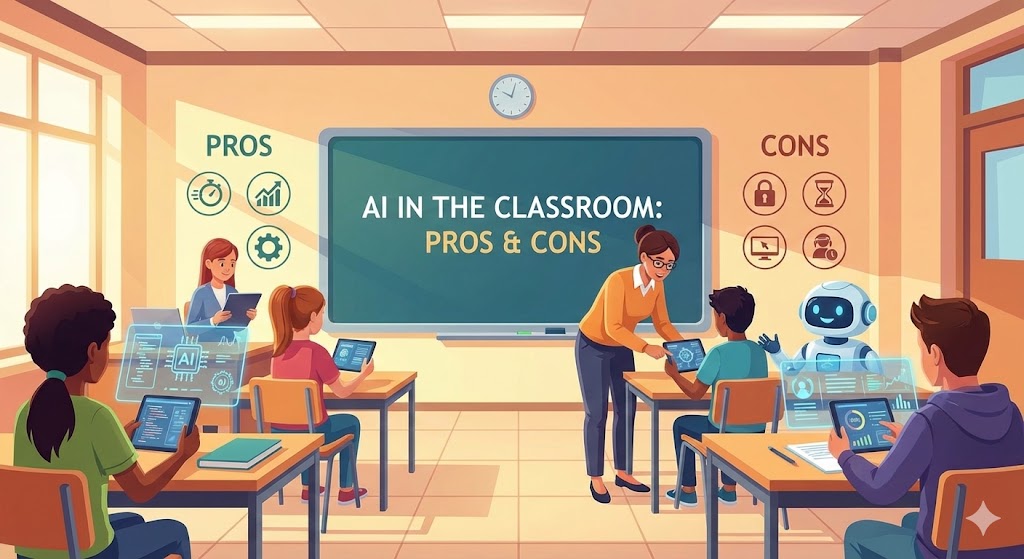
Unit One: Education and Life
Lesson 2
AI in The Classroom: Pros, Cons and The Role Of EdTech Companies
By Olufemi Shonubi
Artificial intelligence has the potential to revolutionise the way we learn and teach. As a tool in the classroom, AI can provide students with personalised learning experiences, automate repetitive tasks and provide instant feedback. However, it also has its limitations. Let us explore the pros and cons of AI as a tool in the classroom, address the concern that AI could be a threat to teachers' and instructors' jobs and discuss the role of edtech companies in advancing this AI use case.
Advantages of AI in the Classroom
One of the main advantages I see of AI in the classroom is personalised learning. Al-powered educational tools can analyse data on student performance and provide tailored support to improve their grades.
Al can also provide instant feedback. For example, AI-powered educational tools can provide students with immediate feedback on their work, allowing them to identify and correct mistakes quickly.
Another advantage of AI is its ability to automate repetitive tasks. It can grade assignments and quizzes, which can free up teachers' time for other tasks, such as lesson planning and providing more one-on-one attention to students.
There are already a few AI tools that support learning in classroom or workplace contexts. For example, Ahura is an Al-powered learning assisant that tracks learning habits by observing attention and engagement. Knewton offers an adaptive learning platform that provides personalized learning experiences for students. Querium is an AI-powered tutor that provides students with step-by-step tutoring on math problems and builds personalized lesson plans. ALEKS is an Al-powered learning platform that provides individualized learning paths based on students' strengths and weaknesses. Carnegie Learning offers an AI-powered tutor that helps students improve their math skills by providing personalised learning based on their performance. There's also Smart Sparrow, which allows users to provide constructive feedback that is unique to each student. Finally, Gradescope is an AI-powered grading tool that automates the grading process, which can free up teachers' time and allow them to provide more individualised attention to students.
These are just a few examples of Al tools with applications in the classroom. It is important to note that these tools should not replace teachers but rather assist them in their work.
Downsides and Challenges of AI in the Classroom
Some teachers and instructors may see AI as a threat to their jobs, believing it will automate their tasks and make them redundant. But it is important to note that AI is not meant to replace teachers but rather to assist them in their work. AI is a tool and should be developed and used as such.
There are also negatives to consider, one of which is the cost of developing and implementing Al-powered educational tools. This can be a significant barrier for schools and teachers who need more resources to invest in AI technology.
There is also the lack of human interaction and emotional support that students receive when using AI-powered educational tools. While AI can provide personalized learning and instant feedback, it cannot replace the human and emotional support that students need to succeed, and relying too heavily on AI-powered educational tools may impact students negatively.
Privacy concerns are also a limitation of AI in the classroom. Al-powered educational tools may collect and store sensitive personal data, which raises concerns about privacy and security.
The Role of EdTech Companies
Edtech companies play a crucial role in advancing the use of AI in the classroom and ensuring that it is used ethically and responsibly. To do so, they should consider the following:
1. Cost: The cost of developing and implementing Al-powered educational tools can be a significant barrier for schools and teachers. Edtech companies should work to make AI technology accessible to a broader range of schools and teachers and explore alternative funding options, such as grants or partnerships, to help offset the costs.
2. Human interaction: Al-powered educational tools cannot replace the human and emotional support that students need to succeed. Edtech companies should aim to develop AI tools that augment. rather than replace, the role of teachers and provide students with a well-rounded education that includes both personalized learning and human interaction.
3. Privacy and security: Privacy concerns are a significant limitation of AI in the classroom. Edtech companies must ensure that the sensitive personal data collected and stored by Al-powered educational tools are properly secured and that privacy is maintained.
4. Improved AI capabilities: Current AI-powered educational tools have limitations, such as a lack of creativity and originality and a limited understanding of context. Edtech companies should aim to improve AI capabilities and overcome these limitations to create more advanced, innovative and effective AI tools for the classroom.
5. Ethical considerations: Edtech companies should consider the ethical implications of AI technology in education and develop AI tools in a transparent, fair and responsible manner. They must also ensure that they develop and use AI tools in accordance with the laws and regulations governing data privacy, security and intellectual property.
In conclusion, AI has the potential to be a valuable addition to the classroom. Still, edtech companies should develop AI tools with caution and in collaboration with teachers, educators and students to ensure that they are helpful, ethical and effective in meeting the needs of learners. I believe that AI could revolutionise the way we teach and learn.
Vocabulary Study
Difficult words from the passage with their Bangla meanings, synonyms, and antonyms.
|
Word
|
Bangla Meaning
|
Synonym
|
Antonym
|
|---|---|---|---|
|
Revolutionise
|
বৈপ্লবিক পরিবর্তন করা
|
Transform, Overhaul
|
Stagnate, Conserve
|
|
Redundant
|
অপ্রয়োজনীয় / অতিরিক্ত
|
Superfluous, Unnecessary
|
Essential, Necessary
|
|
Augment
|
বৃদ্ধি করা / সহায়ক হওয়া
|
Enhance, Supplement
|
Diminish, Decrease
|
|
Collaborate
|
সহযোগিতা করা
|
Cooperate, Partner
|
Oppose, Compete
|
|
Ethical
|
নৈতিক
|
Moral, Principled
|
Unethical, Immoral
|
|
Implications
|
তাৎপর্য / প্রভাব
|
Consequences, Effects
|
Causes, Origins
|
|
Offset
|
ভারসাম্য রক্ষা করা / ক্ষতিপূরণ করা
|
Counteract, Balance
|
Disproportion, Amplify
|
|
Adaptive
|
অভিযোজনযোগ্য
|
Flexible, Adjustable
|
Rigid, Fixed
|
|
Barrier
|
প্রতিবন্ধকতা
|
Obstacle, Hurdle
|
Aid, Advantage
|
|
Context
|
প্রেক্ষাপট
|
Background, Situation
|
Isolation
|
Multiple Choice Questions (MCQ)
Choose the best answer from the alternatives.
- What is the primary benefit of AI in the classroom mentioned in the text?
a) Reducing school costs
b) Replacing teachers
c) Personalised learning
d) Increasing class size - Which AI tool is specifically mentioned for tracking learning habits by observing attention?
a) ALEKS
b) Ahura
c) Knewton
d) Gradescope - The word "redundant" in the passage mostly means—
a) Essential
b) Unnecessary
c) Advanced
d) Competitive - Which of the following is NOT a benefit of AI mentioned in the text?
a) Automating repetitive tasks
b) Providing instant feedback
c) Providing emotional support
d) Grading assignments - Which AI tool automates the grading process?
a) Smart Sparrow
b) Carnegie Learning
c) Querium
d) Gradescope - According to the text, what is a significant barrier for schools to implement AI?
a) Cost
b) Lack of students
c) Too many teachers
d) Lack of electricity - Querium helps students specifically with which subject?
a) History
b) Math
c) Literature
d) Geography - EdTech companies are advised to develop AI tools that—
a) Replace teachers entirely
b) Ignore privacy concerns
c) Augment the role of teachers
d) Increase the workload of students - What is a major limitation of current AI tools mentioned in the text?
a) They are too fast
b) They are too cheap
c) Lack of creativity and originality
d) They cannot store data - Which company offers an AI tutor for improving math skills based on performance?
a) Carnegie Learning
b) Ahura
c) Gradescope
d) Smart Sparrow - The author suggests that relying too heavily on AI might impact students negatively due to a lack of—
a) Information
b) Human interaction
c) Speed
d) Technology - What suggestion is made to offset the high cost of AI tools?
a) Charging students more
b) Reducing teacher salaries
c) Grants or partnerships
d) Stopping the use of AI - The phrase "free up teachers' time" implies—
a) Teachers will be fired
b) Teachers will have nothing to do
c) Teachers can focus on other important tasks
d) Teachers will work fewer hours - Regarding data privacy, EdTech companies must ensure data is—
a) Sold to advertisers
b) Publicly available
c) Properly secured
d) Deleted immediately - In the conclusion, the author believes AI could—
a) Destroy the education system
b) Revolutionise the way we teach and learn
c) Be a minor distraction
d) Replace all textbooks
Questions Analysis
1. What sort of repetitive tasks can be done by AI?
(AI দ্বারা কোন ধরনের পুনরাবৃত্তিমূলক কাজ করা যেতে পারে?)
2. What advantages do you get in using AI-based educational tools?
(AI-ভিত্তিক শিক্ষামূলক সরঞ্জামগুলি ব্যবহার করে তুমি কী কী সুবিধা পাও?)
3. What disadvantages are there of using Al-based educational tools?
(AI-ভিত্তিক শিক্ষামূলক সরঞ্জাম ব্যবহারের কী কী অসুবিধা রয়েছে?)
4. Name some of the AI tools that various ed-tech companies have created and their functions?
(বিভিন্ন এড-টেক কোম্পানি যেসব AI টুল তৈরি করেছে সেগুলোর কয়েকটির নাম এবং তাদের কাজ উল্লেখ করো।)
5. "AI can make a student lazy and not study at all." - Do you agree with this statement? Justify your stance and explain this statement.
("AI একজন ছাত্রকে অলস করে তুলতে পারে এবং সে পড়াশোনা নাও করতে পারে।" - তুমি কি এই উক্তির সাথে একমত? তোমার অবস্থানের সপক্ষে যুক্তি দাও এবং উক্তিটি ব্যাখ্যা করো।)
Answers
1. What sort of repetitive tasks can be done by AI?
Answer: AI can perform repetitive tasks such as grading assignments and quizzes. By automating these duties, it frees up teachers' time to focus on other important activities like lesson planning and providing one-on-one attention to students.
Bangla Meaning: এআই অ্যাসাইনমেন্ট এবং কুইজ গ্রেডিংয়ের মতো পুনরাবৃত্তিমূলক কাজগুলো করতে পারে। এই কাজগুলো স্বয়ংক্রিয় করার মাধ্যমে, এটি শিক্ষকদের সময় বাঁচিয়ে দেয় যাতে তারা পাঠ পরিকল্পনা এবং শিক্ষার্থীদের প্রতি ব্যক্তিগত মনোযোগ দেওয়ার মতো অন্যান্য গুরুত্বপূর্ণ কাজে মনোনিবেশ করতে পারেন।
2. What advantages do you get in using AI-based educational tools?
Answer: The primary advantages of AI-based educational tools include personalised learning tailored to a student's performance, the provision of instant feedback to correct mistakes quickly, and the automation of repetitive tasks like grading.
Bangla Meaning: এআই-ভিত্তিক শিক্ষামূলক সরঞ্জাম ব্যবহারের প্রধান সুবিধাগুলোর মধ্যে রয়েছে শিক্ষার্থীর কর্মদক্ষতা অনুযায়ী ব্যক্তিগতকৃত শিক্ষা প্রদান, ভুলগুলো দ্রুত সংশোধন করার জন্য তাৎক্ষণিক ফিডব্যাক বা প্রতিক্রিয়া প্রদান এবং গ্রেডিংয়ের মতো পুনরাবৃত্তিমূলক কাজগুলো স্বয়ংক্রিয় করা।
3. What disadvantages are there of using Al-based educational tools?
Answer: Significant disadvantages include the high cost of developing and implementing the technology, a lack of human interaction and emotional support for students, and potential privacy concerns regarding the collection of sensitive personal data.
Bangla Meaning: উল্লেখযোগ্য অসুবিধাগুলোর মধ্যে রয়েছে প্রযুক্তিটির উন্নয়ন ও বাস্তবায়নের উচ্চ খরচ, শিক্ষার্থীদের জন্য মানবিক মিথস্ক্রিয়া ও মানসিক সমর্থনের অভাব এবং সংবেদনশীল ব্যক্তিগত তথ্য সংগ্রহের বিষয়ে গোপনীয়তা সংক্রান্ত উদ্বেগ।
4. Name some of the AI tools that various ed-tech companies have created and their functions?
Answer: Some AI tools mentioned in the text are:
Bangla Meaning: পাঠ্যটিতে উল্লিখিত কিছু এআই টুল হলো:
- Ahura: Tracks learning habits by observing attention.
- Knewton: Provides an adaptive learning platform.
- Querium: Offers step-by-step tutoring on math problems.
- ALEKS: Creates individualized learning paths based on strengths and weaknesses.
- Gradescope: Automates the grading process.
5. "AI can make a student lazy and not study at all." -Do you agree with this statement? Justify your stance and explain this statement.
Answer: I partially agree with this statement. If students rely heavily on AI to generate answers without applying their own critical thinking, they may become passive and lazy. However, the text suggests that if AI is used correctly—as a tool for personalised learning and instant feedback—it can actually assist students and enhance their education rather than replacing their effort. Therefore, AI creates laziness only when used unethically or excessively.
Bangla Meaning: আমি এই উক্তির সাথে আংশিক একমত। যদি শিক্ষার্থীরা তাদের নিজস্ব চিন্তাশক্তি প্রয়োগ না করে উত্তরের জন্য এআই-এর ওপর অত্যধিক নির্ভর করে, তবে তারা নিষ্ক্রিয় এবং অলস হয়ে পড়তে পারে। তবে, পাঠ্যটিতে বলা হয়েছে যে যদি এআই সঠিকভাবে ব্যবহার করা হয়—ব্যক্তিগতকৃত শিক্ষা এবং তাৎক্ষণিক ফিডব্যাক পাওয়ার হাতিয়ার হিসেবে—তবে এটি শিক্ষার্থীদের প্রচেষ্টাকে প্রতিস্থাপন করার বদলে বরং তাদের সাহায্য করতে পারে। তাই, এআই কেবল তখনই অলসতা তৈরি করে যখন এটি অনৈতিকভাবে বা অতিরিক্ত ব্যবহার করা হয়।